In Eastern Congo, Children Pay the Heavy Price of War
 Ficac
FicacIn the eastern Democratic Republic of the Congo (DRC), being born a child has become a perilous fate. War does not only destroy homes and villages; it steals childhoods, breaks bodies, and compromises the future. Between January and February 2025, more than 1,500 children were recruited or used by armed groups in North Kivu, South Kivu, and Tanganyika, according to local civil society organizations met during the mission of the International Forum for Children Affected by Conflict (FICAC). Behind these numbers lie broken lives, stolen dreams, and silent trauma.
In Luvungi, Sange, Kamanyola, Kabare, Masisi, and Goma, children tell the same story: fear has become their constant companion. They are afraid to go to school, afraid to walk to water points, afraid they may never return home. “I was carrying my school bag. They told me to drop it. That was the last day I went to school,” says a 14-year-old boy met in Masisi. Armed men appear suddenly in schools, on roads, or in neighborhoods. Children are abducted in front of classmates or powerless parents and taken far from any witnesses and away from help.
In the bush or in displacement camps, children are transformed into soldiers. A weapon is placed in their hands before they fully understand what war means. They serve as porters, guards, or fighters and are sometimes forced to kill. Girls endure a particular cruelty. Many are raped, forced into domestic slavery, or compelled to become fighters’ “wives.” This suffering often remains invisible, buried under fear and shame. “When a girl returns, she is never the same. And many never return at all,” reports a woman in Kabare.
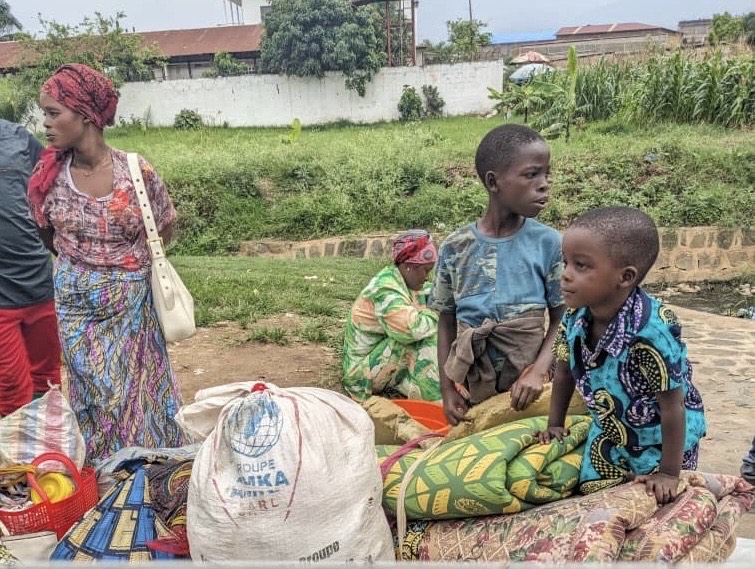
Throughout the region, including refugee camps in Burundi, displaced children live in alarming conditions. In Goma, but also in Luvungi, Sange, Kamanyola, Kabare, and Masisi, families survive in makeshift shelters that are often overcrowded and lack basic protection. Children are deprived of a stable education, sufficient food, and essential medical care. Each day is reduced to waiting: waiting for the fighting to end, waiting for humanitarian assistance, waiting for the world to hear their silent cries. Psychological trauma accumulates, exposing children to fear, anxiety, and uncertainty.
“What we are witnessing is unbearable. We are losing an entire generation, not only in Goma but in all these places where war and displacement have uprooted children and their families,” laments a local child protection activist.
These situations are neither accidental nor “collateral damage.” Violations of children’s rights forced recruitment, sexual violence, exploitation, and deprivation of healthcare and education are systematic, repeated, and well documented. Every day without humanitarian or political intervention is a day in which suffering continues and the future of thousands of children is compromised.
Local civil society organizations, united within the FICAC mission, issue an urgent call: to the government of the DRC, protect children immediately; to the international community, stop looking away and act without delay; to the International Criminal Court (ICC), investigate these crimes and hold perpetrators accountable.
The children of eastern Congo and the refugee camps in Burundi are not statistics. They have names, dreams, and school notebooks left open on empty desks. Abandoning them is allowing violence to decide the future. Protecting them is refusing to let war win.
FICAC communication
